Trying to decide which part of Martinez fits your lifestyle best? That choice can shape your daily routine more than almost anything else, from how often you walk to coffee or errands to how close you are to trails, shoreline recreation, or hillside views. If you are comparing Martinez waterfront, downtown, and hillside living, this guide will help you understand the real differences so you can focus your search with more confidence. Let’s dive in.
How Martinez breaks into lifestyle zones
Martinez has areas that overlap on the map, but city planning documents describe them as distinct lifestyle zones. The Downtown Specific Plan area covers about 220 acres, while the city separately plans for the waterfront marina and shoreline district. The hills to the south and east, along with Alhambra Valley, are described in city documents as more suburban to semi-rural in character.
That makes this comparison useful if you are trying to match a home search to how you actually want to live. In simple terms, the waterfront feels recreation-focused, downtown feels compact and connected, and the hills feel more spacious and residential.
Waterfront living in Martinez
Waterfront lifestyle and setting
Martinez waterfront living centers on the shoreline, marina, and public recreation space rather than a single neighborhood label. According to the city’s Waterfront and Marina information, the area includes about 70 acres of marina land, 332 slips, 65 acres of trust lands, and roughly 135 acres in total.
That setup creates an outdoors-first rhythm. If you enjoy boating, fishing, walking trails, or spending time near open shoreline space, the waterfront stands out for how much recreation is built into the area.
Recreation and open space
One of the biggest draws is how much public space sits right next to the shoreline. Waterfront Park is a 150-acre recreation area with an amphitheater, baseball and softball fields, bocce courts, fishing, a skate park, soccer fields, picnic areas, playgrounds, and restrooms.
The shoreline experience expands beyond the park itself. The same city resource notes that Radke Martinez Regional Shoreline adds nearly three miles of trails along with open lawns, marsh, ponds, and creekside walking areas.
What to consider about the waterfront
The waterfront can be a strong fit if you want your weekends and evenings to revolve around outdoor activity. It is often the best match for buyers who picture shoreline walks, marina access, and public recreation as part of everyday life rather than a special trip.
There is also an important planning angle here. The city notes that waterfront planning must account for sea-level-rise impacts, so this area is tied not only to recreation but also to ongoing land-use planning.
Downtown living in Martinez
Downtown lifestyle and convenience
Downtown Martinez is the city’s historic and cultural core. The Downtown Specific Plan describes it as compact, pedestrian-oriented, mixed-use, and transit-connected, with housing concentrated near transportation centers and the Intermodal Transit Station treated as a major asset.
If your ideal routine includes walking to dining, errands, civic uses, or transit, downtown is the clearest fit. In this part of Martinez, convenience is the point of the place, not just a bonus.
Housing character downtown
Downtown and nearby blocks tend to have older, more varied housing patterns than the hills. City planning documents describe second-story residential over commercial uses, plus nearby bungalow courts, duplexes, fourplexes, and small apartment buildings, many of them more than 50 years old.
For buyers, that often means a different feel from newer suburban-style areas. Instead of one dominant housing type, you may find a mix of building styles and lot patterns tied to Martinez’s long-established core.
Trade-offs to weigh downtown
Downtown offers the most walkable and transit-linked lifestyle in Martinez, but it also comes with practical trade-offs. The city’s CBTP planning page says the area needs safer pedestrian conditions, better bicycle infrastructure, improved transit access, and better sidewalk maintenance.
That does not erase downtown’s appeal, but it does give you a more balanced picture. If you value a compact routine, downtown may still be the right choice, but it helps to understand that circulation and infrastructure are active planning topics.
Hillside living in Martinez
Hillside lifestyle and housing pattern
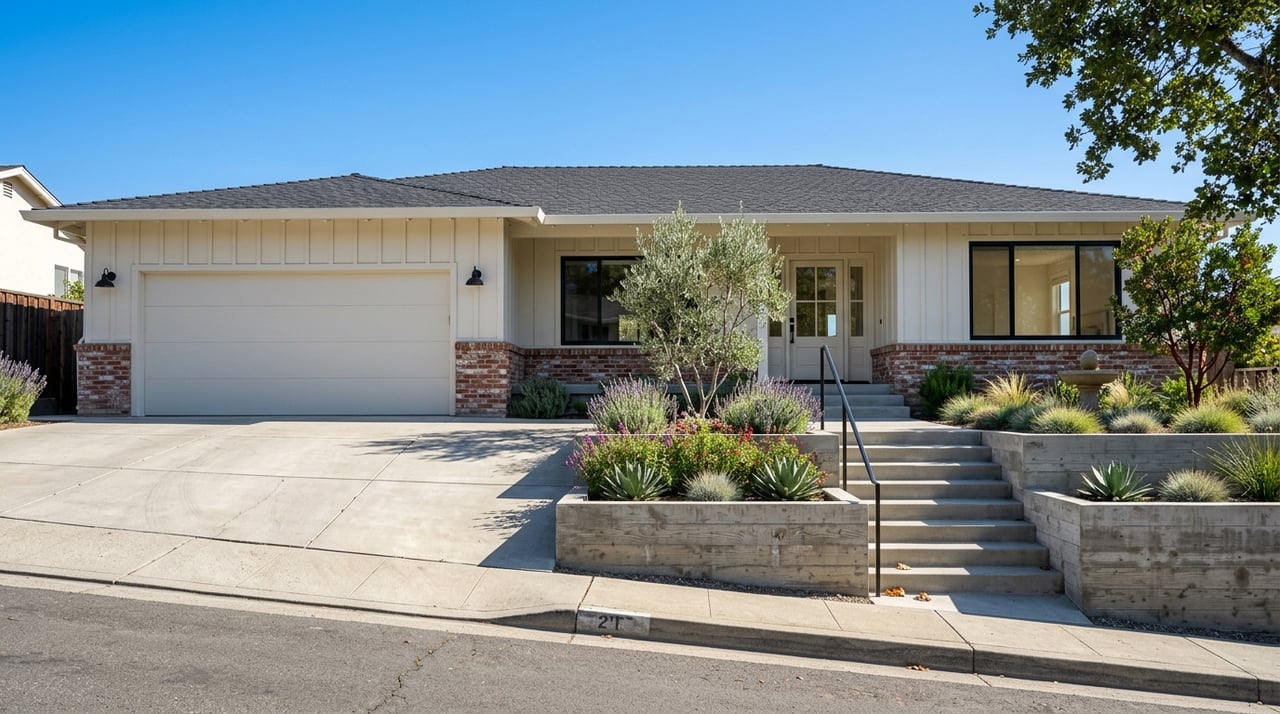
The hillside areas of Martinez offer a different pace. City planning documents describe these neighborhoods as newer and more suburban in feel, with single-family and multifamily housing alongside offices, medical uses, schools, commercial centers, and pockets of open space.
For many buyers, the appeal is simple: more room, more separation between uses, and a less compact daily pattern than downtown. You may trade some walkability for a setting that feels more residential and spread out.
Alhambra Valley and semi-rural character
Alhambra Valley takes that idea even further. The city describes it as about 1,000 acres with creeks, hillsides, scenic vistas, strong topographic variation, and a rural residential feeling. One estate-residential designation calls for detached single-family homes on lots that are typically one acre or larger.
If you are looking for a setting that feels more tucked away, this may be the strongest match. The contrast with downtown is especially clear when you compare density, lot size, and overall pace.
Trails, parks, and views
Trail access is a major reason buyers look toward the hills. Alhambra Hills Open Space is a 29-acre preserve on the city’s tallest ridgeline, with walkways and trails plus views toward Briones Regional Park and the John Muir Historic Site.
The city also notes that Mount Wanda offers 326 acres of hiking terrain open daily from sunrise to sunset. In the broader hillside corridor, the city’s parks listings include Alhambra Hills Open Space, Foothills Park, Golden Hills Park, Hidden Valley Park, John Muir Park, and Mountain View Park.
Which Martinez area fits your routine?
Choose the waterfront if recreation comes first
The waterfront is usually the best fit if you want shoreline access, marina amenities, and large recreation areas close by. It offers the strongest connection to trails, fishing, boating, and event-friendly public space.
If your ideal week includes outdoor time built into your surroundings, this area deserves a close look.
Choose downtown if walkability matters most
Downtown is the strongest match if you want a compact, pedestrian-oriented routine. It is the area most closely tied to mixed-use living, everyday convenience, and transportation access.
If you want to be near the city’s historic core and prefer a more connected daily pattern, downtown will likely feel most natural.
Choose the hills if space is the priority
The hills and Alhambra Valley stand out for scenic outlooks, open space, and a more suburban to semi-rural feel. This is often where buyers focus when they want a less compact environment and more separation from the activity of the core.
If you are comfortable driving more between errands in exchange for views, trail access, and a roomier setting, hillside living may be your best match.
A simple side-by-side comparison
| Area | Best Known For | Daily Feel | Key Trade-Off |
|---|---|---|---|
| Waterfront | Marina, shoreline, recreation | Outdoors-first and activity-focused | Ongoing planning tied to shoreline conditions |
| Downtown | Walkability, mixed-use setting, transit connection | Compact and convenient | Infrastructure and circulation remain important considerations |
| Hillside/Alhambra Valley | Views, open space, suburban to semi-rural setting | Spacious and more residential | Less compact routine and more driving between destinations |
How to narrow your home search
When you compare these areas, it helps to think less about labels and more about your daily habits. Ask yourself where you want to spend your time, how often you want to drive, and whether convenience, recreation, or space matters most right now.
That kind of clarity can make your search faster and more productive. If you are buying or selling in Martinez, the right guidance can help you match the home to the lifestyle, not just the map. The Lupe Kemper Team offers local insight, practical advice, and hands-on support to help you make a confident move.
FAQs
What is the difference between Martinez waterfront and downtown living?
- Martinez waterfront living is centered on shoreline recreation, marina access, and open space, while downtown living is centered on walkability, mixed-use convenience, and transit connection.
Is downtown Martinez the most walkable area in Martinez?
- Yes. City planning documents describe downtown as compact, pedestrian-oriented, mixed-use, and transit-connected.
What is hillside living like in Martinez?
- Hillside living in Martinez is generally more suburban in feel, with more open space, scenic views, trail access, and a less compact daily routine than downtown.
Does Martinez waterfront include parks and trails?
- Yes. The waterfront area includes Waterfront Park and access to Radke Martinez Regional Shoreline, with trails, lawns, marsh, ponds, and other recreation features.
Is Alhambra Valley part of the hillside lifestyle in Martinez?
- Yes. City planning documents describe Alhambra Valley as a more semi-rural part of the broader hillside story, with creeks, hillsides, scenic vistas, and rural residential character.