According to Citizen Portal's report, the Lafayette Planning Commission voted 3-1 on April 20, 2026, to approve Phase 1 of a hillside development permit for a two-story home on Happy Valley Road. The property had been in the pipeline since 2011. Portions of the design were approved in 2014, again in 2018, and the application was continued or withdrawn more than once along the way before finally clearing this spring, with the commission requiring updated, peer-reviewed hydrology and geotechnical reports before final sign-off.
That is not an unusual timeline for a hillside build in Lafayette. It is the normal one. And if you own a sloped lot anywhere from Reliez Valley to Happy Valley Road and are thinking about listing, that fifteen-year permit history matters more to your sale than the earthquake box on your disclosure form.
The Box Everyone Checks and the One Nobody Reads Closely
Every California home sale includes a Natural Hazard Disclosure Statement covering mapped hazard categories, including seismic hazards. One of the seismic categories is the Earthquake Fault Zone, mapped under the Alquist-Priolo Act. Lafayette's own General Plan Safety Chapter confirms the city currently has no state-designated Alquist-Priolo Special Studies Zone within its planning area. Most sellers here will check "No" on that line, and most buyers will read that "No" as a clean bill of health.
It isn't the whole picture. The same city document goes on to describe the terrain in less reassuring terms: much of Lafayette sits on ridges with steep slopes, and many parcels with development potential occur in hilly areas with known landslides and slopes highly susceptible to landsliding. That language sits in the city's own Safety Element, separate from the state's Alquist-Priolo maps and separate from the Seismic Hazard Mapping Act zones that cover landslide and liquefaction risk under Public Resources Code Section 2696. A property can clear the fault-zone box entirely and still carry a documented slope history that a lender, an insurer, or a buyer's geotechnical consultant will want to see addressed.
The distinction is not academic. California's MyHazards guidance says that for an already developed property, state law does not require a new geologic study unless the owner plans to substantially add onto or remodel the structure. So a seller listing an existing hillside home as-is is not on the hook for a new report by default. But that same rule cuts the other way for buyers: if their plans include an addition, a pool, or a new retaining wall, the geotechnical question resurfaces the moment they own the place, and a savvy buyer's agent knows to ask about it before closing rather than after.
What the County Actually Enforces at the Wall
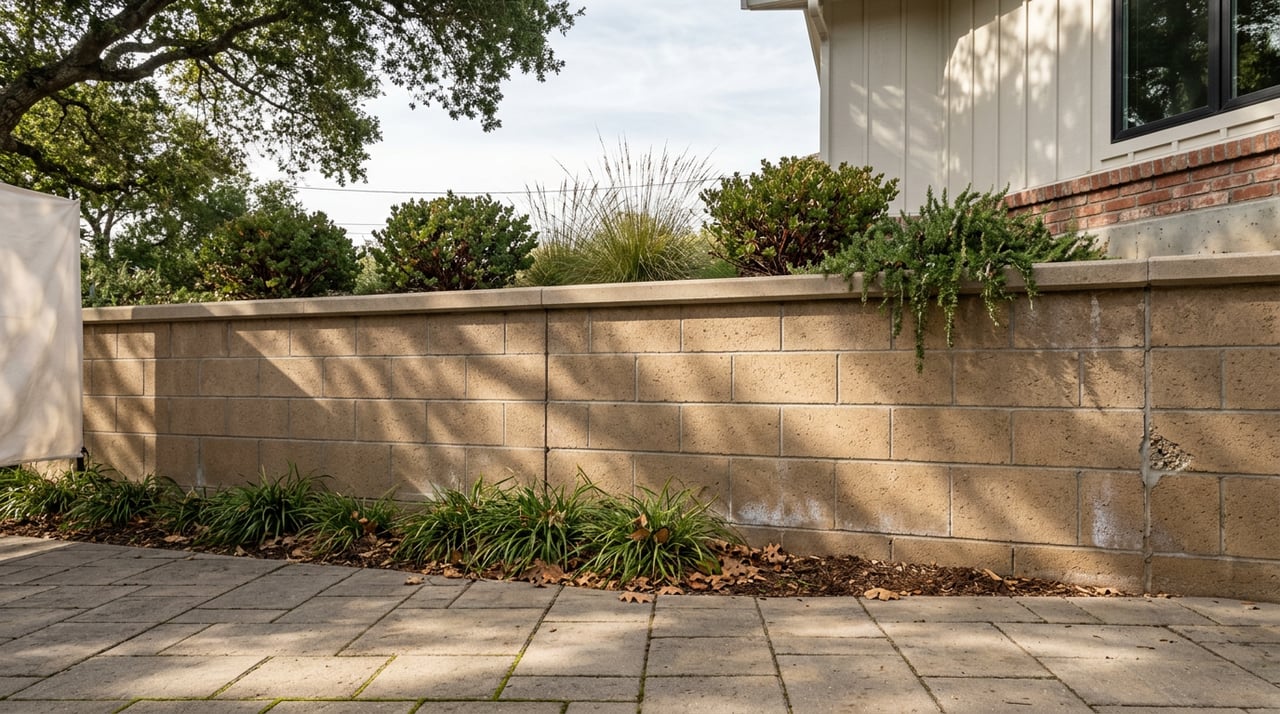
Contra Costa County's building rules draw a specific line on retaining walls: anything three feet or taller from the top of the footing to the top of the wall requires a building permit, according to the county's own permit information page. Shorter walls can skip the permit in many cases. Taller ones cannot, and on a hillside lot, three feet disappears fast once you are terracing a yard or holding back a slope behind a garage.
Lafayette adds a wrinkle most sellers do not think about until escrow: the city handles planning approval, but building permit plan check and inspection are performed by the Contra Costa County Building Inspection Department on the city's behalf. That means the paper trail for a single retaining wall can live in two different filing systems, city planning files and county building records, and a title company or inspector pulling permit history has to know to check both. On a flat interior lot this rarely comes up. On a hillside lot with multiple retaining structures built at different times, it is exactly the kind of gap that surfaces during a buyer's due diligence window rather than before you ever list.
What the Happy Valley Road Case Actually Shows
Return to that April 2026 vote for a moment, because the details matter more than the headline. The commission did not simply approve a house. It approved Phase 1 on the condition that the hydrology and hydraulics study be updated to reflect the current footprint and peer reviewed, and that the geotechnical report be updated and peer reviewed as well, with Phase 2 held back to address landscape and irrigation plans in a separate future review. Neighbors raised concerns that tree removal and new retaining wall construction could increase both landslide and drainage risk on the site, concerns that are typical for hillside proposals in this part of Lafayette and that the commission took seriously enough to require additional technical review before signing off.
For a current owner of a hillside property, the lesson is not that your home will face the same scrutiny as new construction. It is that the standard for what counts as a complete, defensible permit file has been rising, publicly and recently, in your own city's planning records. If your retaining walls, additions, or grading work were completed years ago under looser review or without a permit at all, that gap becomes visible the moment a buyer's inspector or lender starts asking the same questions the Planning Commission just asked on Happy Valley Road.
Reading the Numbers in Reliez Valley
As of July 2026, hillside homes in Lafayette's Reliez Valley area, the quadrant that includes Springhill, Silver Dell, and Rancho View Knolls along the edge of Briones Regional Park, carried a median sale price of $2,095,000 and an average of 36 days on market. That pace is fast for homes at that price point, and it tells you something specific: buyers in this price range are not slowing down to negotiate over hazard disclosures they already expect. They are moving quickly on properties where the file is clean and asking hard questions on the ones where it isn't.
A complete permit history does not just protect you from a difficult escrow. It is part of what keeps a hillside listing moving at that same 36-day pace instead of sitting while a buyer's attorney requests records from two different county offices.
Before You Sign a Listing Agreement
A few things worth pulling together before your home goes live, not after an offer comes in:
- Request your property's permit history directly from Contra Costa County's Building Inspection Department, since permits issued from the 1980s forward are searchable online and older ones require a records request through the department's Martinez office.
- Identify every retaining wall on the property three feet or taller and confirm whether each one has a matching building permit.
- Locate any existing geotechnical or soils report for the property, especially if additions or major grading occurred after the original construction.
- Ask whether a Hillside Development Permit was involved in any past work on the lot, and if so, whether every phase of that permit was closed out or if something was left pending.
- Confirm your Natural Hazard Disclosure provider is checking both the state Seismic Hazard Zone maps and any locally documented hazard notes in Lafayette's General Plan Safety Element, not just the Alquist-Priolo fault layer.
None of this changes what you're required to disclose by law. It changes how fast your sale moves once a buyer's team starts asking the same questions Lafayette's own planning staff has been asking with increasing rigor.
A Few Questions Worth Asking First
Does selling my hillside home require a new geotechnical report?
Not automatically. State guidance is clear that an already developed property does not need a new geologic study unless you plan to substantially add onto or remodel it. What you do need is documentation of whatever geotechnical work was already done, since a buyer planning future construction will ask for it.
What makes a lot count as "hillside" for permit purposes in Lafayette?
The city does not set an exact slope percentage in its general disclosure materials, but its Hillside Development Permit process applies to sloped parcels where grading, tree removal, or new structures could affect drainage or slope stability, the same category of review the Happy Valley Road project went through.
How can old, unpermitted retaining walls affect a sale?
Old, unpermitted retaining walls are a common point of buyer negotiation. A wall three feet or taller without a matching county permit is the kind of gap a lender's appraiser or a buyer's inspector is likely to flag, and addressing it before listing is usually faster and cheaper than negotiating it during escrow.
If you own a sloped lot anywhere in Lafayette and want a straight read on what your specific permit file looks like before you list, that is exactly the kind of groundwork the Lupe Kemper Team does before a home ever hits the market. Request a Free Home Valuation and we will walk the property with you, construction background included, and tell you what a buyer's team is actually going to ask.
This article is general information, not legal, tax or financial advice. Consult a qualified professional about your situation.