If you've ever watched a home-improvement show quote a "$25,000 kitchen makeover" and then gotten a real bid from a Bay Area contractor, you already understand the problem with most renovation advice: it's written for the national average, and Martinez is nowhere near the national average.
The good news is that the math here actually works in a seller's favor — if you spend in the right places. The bad news is that the same local premium that rewards smart upgrades will punish the wrong ones twice as hard. This guide is built specifically for Martinez homeowners deciding what to fix before they list, grounded in East Bay costs, Contra Costa County realities, and what local buyers will and won't pay for.
Why ROI in Martinez Doesn't Match the National Numbers
The most-cited renovation data in the country — Remodeling Magazine's annual Cost vs. Value Report — breaks its returns out by region, and the Pacific region (which includes California) consistently beats the national figures. Where projects nationally tend to recoup somewhere in the 55–62% range across the board, Pacific-region projects average closer to 60–70%, and the highest-impact curb-appeal projects — a minor kitchen refresh, a new garage door, manufactured stone veneer — routinely push 80% to over 100% recouped value.
That gap exists because buyers here put an enormous premium on turnkey homes. A buyer moving from Oakland or San Francisco has stretched to qualify for the mortgage and has nothing left over for a renovation; they will actively pay up for a home they can move into and forget about.
But there's a second number you can't ignore: the cost of getting the work done. Hard construction costs — labor and materials — run roughly 30–40% above the national average across the Bay Area. Electricians and plumbers bill $125 to $250+ an hour. California's building codes (Title 24 energy mandates, seismic requirements, wildfire-zone retrofits) add both rigid material costs and permitting timelines that stretch your carrying period. The strategic consequence is counterintuitive but important: because you're already paying a premium just to get a contractor on site, doing a project halfway or with cheap finishes is a financial trap. You've absorbed the expensive part — the labor — and skimped on the part buyers actually see.
So the entire game in Martinez comes down to choosing high-visibility, high-margin "Value" projects and executing them well, while avoiding deep, structurally invasive "Cost" projects that don't return what they consume.
Start With Your Buyer and Your Housing Stock — Not a Pinterest Board
Before deciding on a single upgrade, you have to know two things: what kind of home you're starting with, and who's going to buy it. Martinez is unusual in the East Bay because its housing stock isn't uniform — it's a patchwork of eras, and the age of your home dictates the hidden, unrecoverable costs (knob-and-tube wiring, unreinforced masonry, legacy plumbing) that can quietly eat a renovation budget.
The Downtown and historic core is largely pre-1940s — Victorians, Craftsman bungalows, early-1900s cottages. These are full of character but come with small closets, chopped-up kitchens, single bathrooms, and legacy infrastructure, which means remodeling demands historical sensitivity and often carries higher structural costs. The mid-century tracts of the 1950s–70s, concentrated in neighborhoods like Mountain View and near Morello Avenue, are the classic "good bones" homes: predictable single-story ranches that open up into modern great rooms relatively easily. The hillside and ridge properties built from the 1980s into the early 2000s, perched above the Delta or tucked into Alhambra Valley, have modern systems but are now hitting the age where original kitchens, primary baths, and decks all need a refresh at once.
Layered on top of the architecture are three distinct price tiers, and your ROI strategy changes completely depending on which one you're in:
| Tier | Price Range | Who's Buying | The ROI Strategy |
|---|---|---|---|
| Entry | $550K–$750K | First-time buyers, FHA/VA borrowers, value-seeking commuters | Max ROI through sweat equity: paint, flooring, clean landscaping. Do not relocate plumbing or walls — the budget can't absorb luxury finishes. |
| Mid | $750K–$1.1M | Move-up buyers and young families migrating from Oakland/SF for space and schools | The sweet spot for kitchens and baths. Clean, stylish, mid-to-high finishes recoup beautifully because buyers want turnkey and are maxing their budgets to win the house. |
| Upper | $1.1M–$1.8M+ | Valley estates, premium-view properties, multi-generational buyers | High-end customization expected — premium stone, custom cabinetry, cohesive indoor-outdoor living. Turnkey luxury commands a premium; a dated estate sits. |
As for what Martinez buyers specifically pay up for, they're a pragmatic, lifestyle-oriented group — different from the buyers in wealthier interior towns like Lafayette or Alamo. Four things move them consistently: seamless indoor-outdoor flow and views (the hilly topography and Delta breezes make a good deck or patio function as a second living room and trigger an emotional purchase); a real work-from-home space (a huge share of buyers are hybrid commuters into SF, Oakland, or Silicon Valley, and a private office or convertible bonus room is now a checklist item, not a luxury); kitchens built for entertaining that open into the living space; and low ongoing costs — given California utility rates, buyers are openly analytical about energy efficiency and water use.
Everything that follows is built on this foundation. Match the tier and the buyer, and the project pays. Ignore them, and even beautiful work loses money.
Kitchens: Where the Mid-Range Wins
The kitchen is still the room that closes the deal, but in Martinez the level of remodel matters more than the fact that you did one.
A minor cosmetic facelift — keeping the layout, refacing or painting cabinets, mid-range quartz, a new tile backsplash, standard stainless appliances, new lighting — runs roughly $35,000–$55,000 here. A mid-range major remodel with new semi-custom cabinetry, an updated layout, a functional island, stone counters, a full efficient-appliance package, and recessed lighting lands around $75,000–$115,000. A full upscale gut-rehab — structural work to open up a great room, custom cabinetry, quartzite or marble, pro-grade Wolf/Sub-Zero appliances — starts at $150,000–$200,000+.
For most of Martinez, the mid-range major remodel is king. It aligns precisely with the dominant mid-tier ($750K–$1.1M) market, where buyers will pay an active premium for a fresh, turnkey kitchen and where the cost is absorbed into a ~$950,000 valuation without pushing past the neighborhood ceiling. The upscale remodel is usually a trap unless the home is a genuine Alhambra Valley estate or ridge-line property well north of $1.5M — drop $175,000 into a kitchen inside an $850,000 mid-century tract home and you've simply guaranteed a net loss.
There's also an architectural fix worth understanding. In older Downtown and 1950s homes, buyers walk in and immediately penalize two things: the closed-off "galley cage" kitchen that cuts the cook off from everyone else, and the footprint pinch — countertops and storage designed before oversized refrigerators, dishwashers, and every other modern appliance existed. Where structural costs allow, opening a wall to create sightlines into the living area is what triggers bidding. Where they don't, the workaround is maximizing what you have: pantry pull-outs, eliminating bulky soffits, and adding a counter-depth or rolling island so a tight layout still passes buyer scrutiny.
Bathrooms: The "Under-Bathed" Opportunity
A cosmetic bathroom refresh — same footprint, new vanity, toilet, fixtures, fresh tile or LVP over the old floor, mold-resistant paint, the existing surround reglazed — runs about $12,000–$22,000. A full down-to-the-studs renovation that fixes hidden dry rot, swaps galvanized plumbing for PEX, brings electrical to code, and adds custom tile and a frameless glass enclosure runs $35,000–$65,000+.
But the single highest-yielding bathroom move in Martinez isn't a renovation at all — it's adding a bathroom. A large share of the historic core and older mid-century tracts are 3-bedroom, 1-bath homes, which are severely under-bathed by modern standards. Young families scrolling Zillow filter out 1-bath listings instantly. Adding a second full or half-bath — often carved out of an oversized closet or laundry nook — moves the home from "compromise starter" into "long-term family home" and can command a $50,000–$90,000 premium, comfortably outrunning the cost of construction.
By tier: in the entry market, a clean cosmetic refresh is plenty — buyers want sanitary and functional, not a spa. In the mid-tier, a full renovation or that second bath is where the ROI lives, because this buyer expects a primary-suite experience even in a compact footprint.
Water efficiency is worth a mention because Northern California buyers read it as a signal of overall maintenance. CALGreen-standard low-flow showerheads (1.8 gpm) and high-efficiency toilets (1.1–1.28 gpf) are baseline expectations now, and they're cheap, high-impact swaps. Locally, the Contra Costa Water District offers a Laundry-to-Landscape greywater rebate and routinely hands out free aerators and leak-detection kits, and if a bathroom project is folded into a larger electrification upgrade (say, a heat-pump water heater), BayREN and MCE Clean Energy incentives can offset hundreds to thousands of dollars.
Curb Appeal and the Fire-Smart Yard
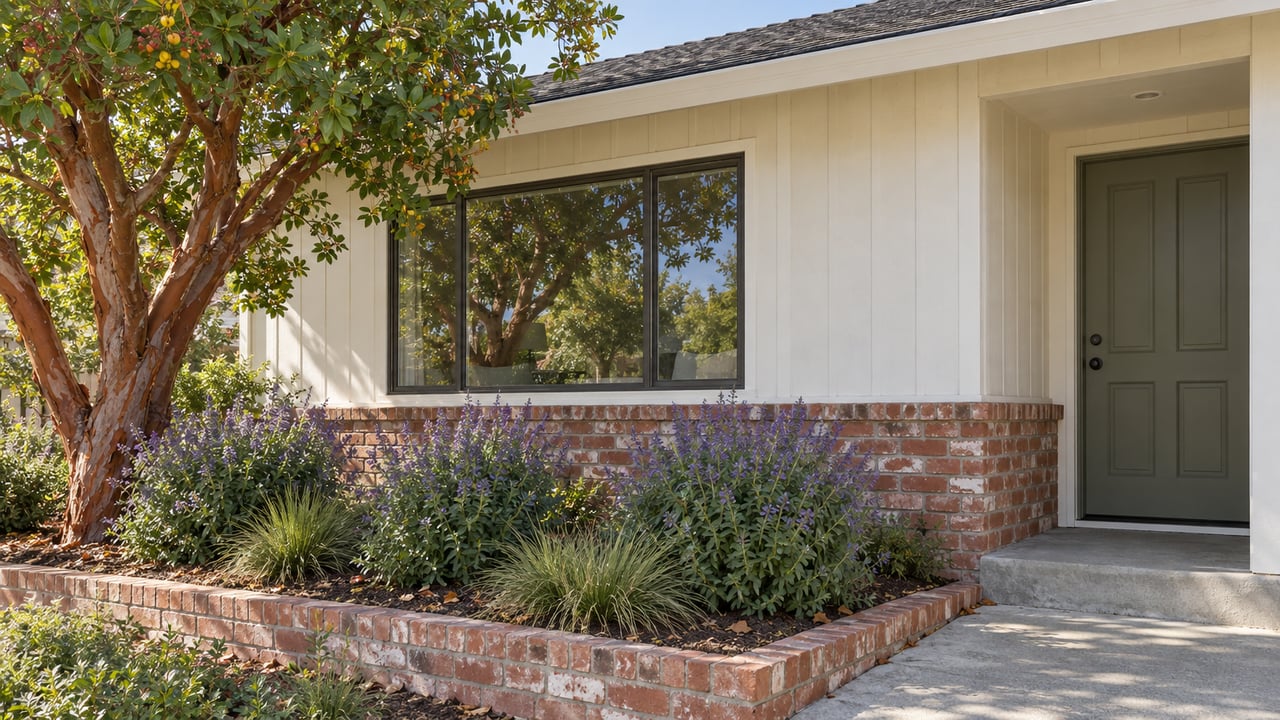
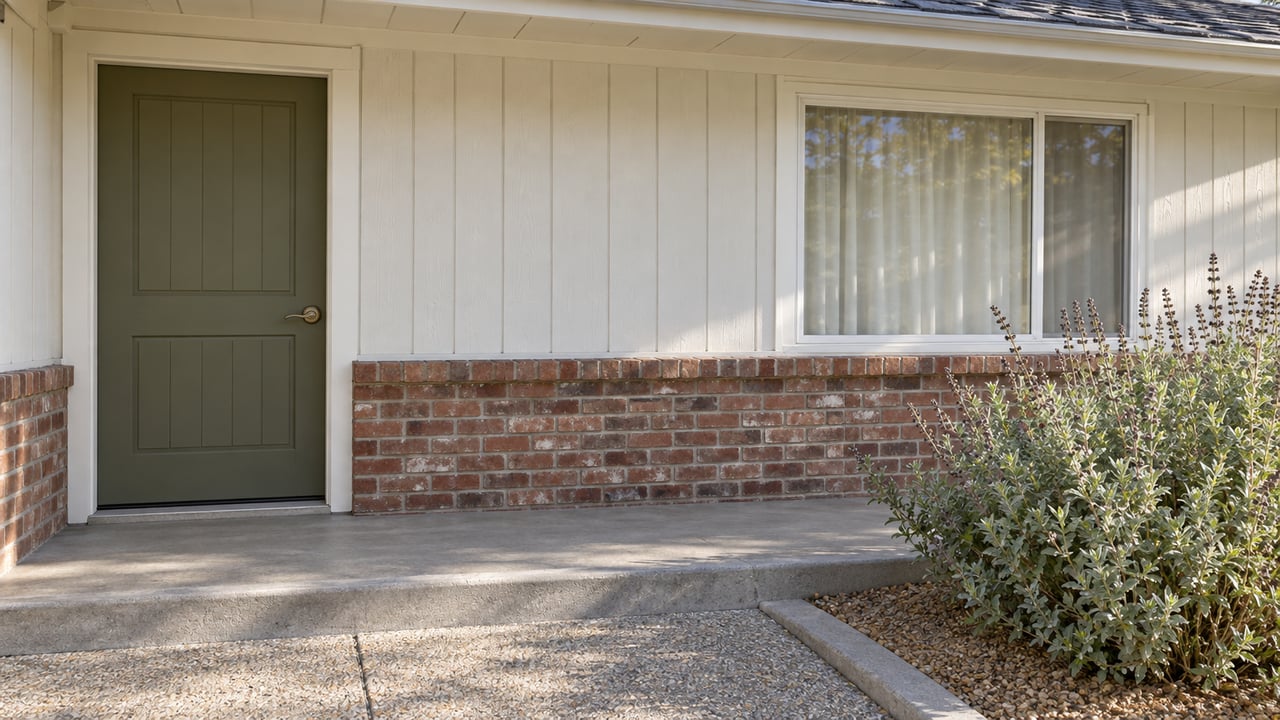
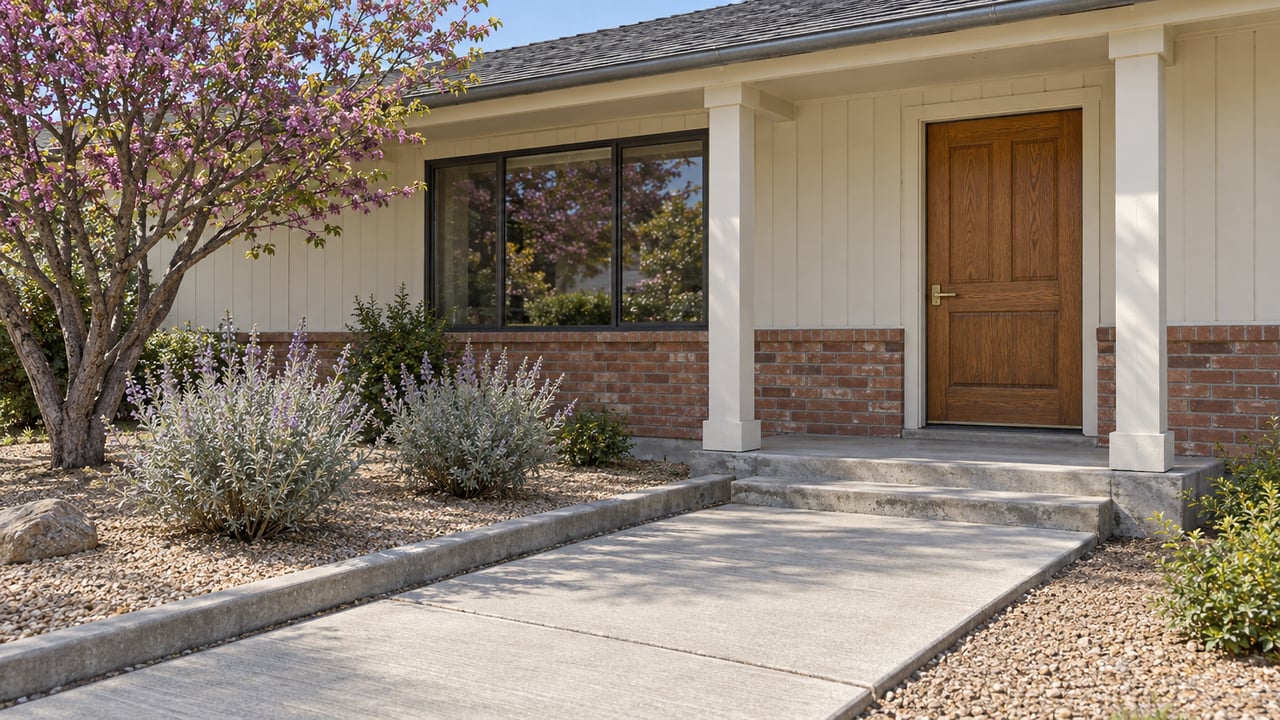
Buyers decide on a home in the first thirty seconds at the curb, which is why East Bay agents see the front entry and the primary outdoor entertaining zone return fastest. A basic curb-appeal refresh — clearing dead brush, fresh mulch, low-maintenance perennials, reseeded lawn, power-washed walkways, a painted front door — runs $8,000–$15,000. A mid-range exterior with drip irrigation, a modest paver or stamped-concrete patio, a cohesive drought-tolerant palette, and updated lighting runs $25,000–$55,000, and a new garage door belongs on this list specifically because it regularly returns 90–100%+ in the Pacific region by instantly modernizing the facade. High-end hardscape — structural retaining walls, outdoor kitchens, fire pits — runs $75,000–$150,000+ and only pencils on the upper-tier estates.
Here's where national advice actively hurts you. Those blogs pushing lush English gardens and expansive green lawns are giving Martinez hillside sellers a recipe for losing money and scaring off buyers. Large stretches of Martinez's hillside communities — Alhambra Valley, Hidden Lakes, the ridge developments — border high or very-high Fire Hazard Severity Zones, and Con Fire enforces weed-abatement deadlines (typically June 1). Today's buyers look for a Zone 0 ember-resistant band in the first five feet around the house — gravel or pavers instead of combustible bark, no limbs overhanging the roof — and they scrutinize yards for "ladder fuel," wanting lower tree branches limbed up 6–10 feet.
They also know which plants are liabilities. Junipers (locally nicknamed "gasoline bushes"), eucalyptus, bamboo, pampas grass, and Italian cypress all read as red flags now; lavender, native salvias, California fuchsia, succulents like agave and dudleya, and a properly limbed-up coast live oak read as responsible. A modern xeriscape with drip irrigation does double duty: it cuts the water bill under California's tiered pricing and lowers fire risk, which makes the home easier to insure — an increasingly real concern that buyers price in.
Finally, three exterior trouble spots draw local inspectors specifically because of Martinez's soils and climate. Retaining walls matter because the expansive clay soils swell and shrink between wet winters and dry summers; a leaning or cracking wall signals a $20,000–$50,000 repair and buyers discount accordingly. Wood siding on older Downtown homes is prone to dry rot and termite damage near the humidity of the Carquinez Strait, and it shows up in the Section 1 pest report. And the large cantilevered decks on hillside homes dry out and rot at the joists under intense summer sun — replacing a weathered deck with composite (Trex, TimberTech) and clean cable or metal railings turns a maintenance liability into something buyers will pay extra for.
Energy Efficiency and Solar: A Real California Story
In PG&E territory, energy performance isn't a green footnote — it's part of the home's financial profile, and buyers treat it as a point of negotiation. PG&E's tiered residential rates sit around $0.41 per kWh, against a national average closer to $0.16–$0.18. During a hot Martinez summer, an older central AC unit can push a 3-bedroom home's monthly bill past $500–$700, and buyers know that overhead functions like an extra tax stacked on the mortgage.
The most important thing a seller can understand here is how much the solar calculus has changed. Under the old NEM 2.0 rules, excess daytime power sold back to the grid for near-retail credit ($0.30+/kWh). Under NEM 3.0, that export credit dropped roughly 75%, to about $0.05–$0.08/kWh — which stretched the payback window on a solar-only system from 5–6 years out to 9–13. Buyers are educated on this, and an un-batteried system no longer commands the premium it once did. What does command a premium today is solar plus storage: a battery (Tesla Powerwall, Enphase 5P) that banks cheap daytime generation and discharges it during the 4–9 PM peak when rates are highest. Homes with an owned solar-plus-battery system see meaningfully stronger demand and appraisal support because they promise real insulation from grid prices. If you have solar, knowing whether it's owned vs. leased and battery-backed vs. not is now a material listing detail.
A word of caution on permitting: Title 24 attaches strict efficiency requirements to permitted work — extend a room, replace a roof, or swap an HVAC unit and you trigger requirements like sealed, pressure-tested ductwork and strict window U-factors. Unpermitted, uninsulated modifications discovered during inspection are a leading cause of escrow renegotiation in the East Bay, so legitimate permits are part of protecting your price. If you do need to modernize before listing, stack the incentives — BayREN's EASE Home program covers a large share of building-envelope work (attic insulation, duct sealing, smart thermostats), and the state's HEEHRA and TECH Clean California frameworks push real point-of-sale discounts toward heat-pump HVAC and heat-pump water heaters through qualified installers.
The ADU: Martinez's Standout Equity Play
Forget attic and basement conversions — in California, the accessory dwelling unit is the most powerful equity move available to a homeowner, and Martinez is unusually friendly to it. State law sharply limits a city's ability to block ADUs, and Martinez complies with permissive HCD standards: a homeowner can build one detached ADU up to 1,200 sq. ft. and one Junior ADU up to 500 sq. ft. carved from existing space on a single-family lot. Owner-occupancy mandates have been permanently eliminated — both units can be rented to separate tenants — and parking minimums disappear if the ADU is within a half-mile of transit (including the Downtown Amtrak station) or inside the Historic Overlay District. Detached ADUs need only a 4-foot side and rear setback, and keeping the unit under 750 sq. ft. exempts it from municipal impact fees; cross that line and you trigger city and Martinez Unified school fees that add $10,000–$30,000 in soft costs instantly.
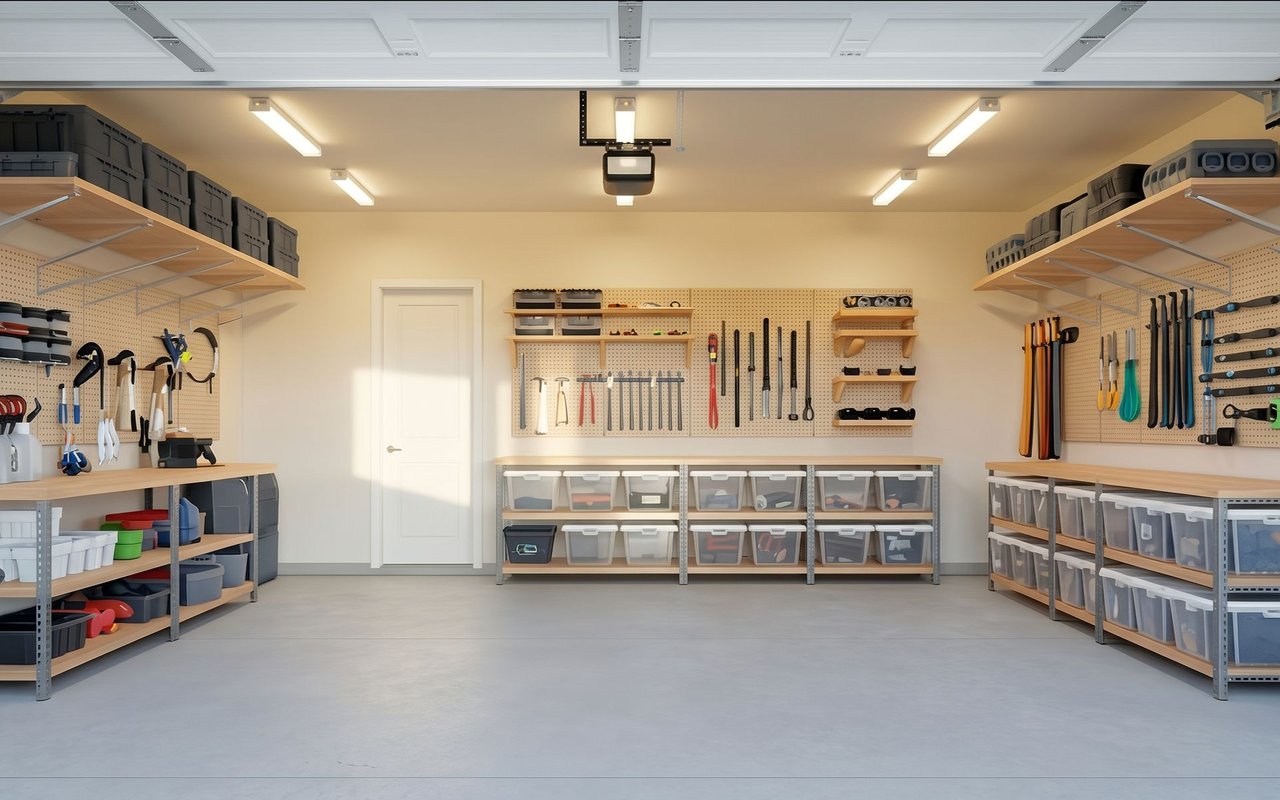
The financial mechanics are what make it compelling. A garage conversion (~400 sq. ft.) runs $90,000–$150,000 because the foundation, framing, and roof already exist; a detached 500–750 sq. ft. build runs $225,000–$375,000+ at $450–$550+ per square foot. In return, a permitted, well-built ADU tends to add roughly $150,000–$250,000 in immediate market value, and the rental engine is strong: a 1-bedroom unit pulls $2,100–$2,500/month and a 2-bedroom $2,700–$3,200, which regularly outpaces the debt service even when financed through a HELOC or ADU construction loan.
Feasibility, though, is entirely lot-dependent. The mid-century flatlands — Mountain View, the Morello corridor, Virginia Hills — are the clear winners, with wide 7,000–10,000+ sq. ft. lots and the side-yard access that makes trenching utilities to the backyard predictable. Downtown lots are tighter, but their historic detached garages are often the perfect candidate for a conversion, since state law protects the existing footprint and lets you build in place around setbacks that would otherwise kill new construction. Hillside estates are the financial wildcards: a sloped lot demands engineered pier foundations and retaining walls that add $25,000–$60,000 before framing, and a high-fire-zone parcel forces expensive fire-resistant materials and interior sprinklers. The view is spectacular; the soft costs are brutal.
Flooring, Paint, and the Neutral Playbook
Dollar for dollar, flooring and paint outperform almost everything — they cover the whole footprint, mask flaws, and make spaces feel larger. LVP or engineered laminate runs $7–$13/sq. ft. installed, engineered hardwood $14–$24, and refinishing existing solid oak $6–$10 — the right call for older homes with salvageable top-nail floors.
The aesthetic preference is remarkably consistent across every tier: wide-plank, matte-finish European white oak (or LVP that mimics it). Buyers reject high-gloss, dark cherry, and reddish Brazilian tones, which read dated and shrink a room. LVP is broadly accepted in mid-century tracts and entry-level homes for its durability — but in the upper tier ($1.1M+), LVP instead of real engineered hardwood reads as a flip-quality shortcut and gets penalized. And wall-to-wall carpet in main living areas is an active discount; keep carpet to bedrooms, fresh and neutral, if at all.
On paint, "neutral" has shifted, and getting it wrong matters. The cool grays that ruled the 2010s are dead — under Martinez's golden-hillside afternoon light, cool gray reads dingy and blue. The current standard is warm greige, warm alabaster, and mushroom tones, which soften a room and help chopped-up Downtown layouts flow. The palette local agents lean on is narrow and proven: Sherwin-Williams Alabaster (SW 7008) as the go-to bright-but-warm white for dark or historic homes; Benjamin Moore Swiss Coffee (OC-45) for creamy main-living warmth; Benjamin Moore Edgecomb Gray (HC-173) as an organic greige backdrop for open mid-century homes; and Sherwin-Williams Accessible Beige (SW 7036) for cozy bedrooms. One pro move worth following: paint walls, baseboards, and trim the same soft white and just vary the sheen (eggshell on walls, semi-gloss on trim). Eliminating the harsh color border between wall and trim makes the low 8-foot ceilings in mid-century ranches feel six inches taller.
Clear the Structural Debt First
Here's the discipline that separates a profitable sale from a stalled one: in the hyper-vigilant Bay Area market, buyers hire specialized inspectors who treat infrastructure problems as deal-breakers. If your home has systemic structural or drainage issues, a cosmetic refresh just looks like a cover-up. You almost always come out ahead addressing the heavy items first — or packaging them transparently in pre-listing inspections — before you spend a dollar on paint.
A few of these are specific to Martinez. Sewer lateral compliance is legally tied to the transaction: most of Martinez falls under Central Contra Costa Sanitary District (Central San), which requires a video lateral inspection before close of escrow, and a line with root intrusion, cracking, offsets, or a missing cleanout will be denied a Certificate of Compliance — meaning it has to be repaired to close, unless the buyer signs a hardship waiver. Hillside drainage and foundation stress comes from those expansive clay soils; inspectors look for perimeter mud-slabbing, diagonal cracks over door frames, and leaning walls, and the fix is proper French drains and surface drainage routing water away from the foundation. And seismic retrofitting matters given the nearby Hayward and Calaveras faults — inspectors check crawlspaces on pre-1980s homes to see whether the sill is bolted to the foundation and the cripple walls are sheathed in plywood; a home marketed as retrofitted earns an immediate trust premium.
When something does fail, you're choosing between fixing it pre-listing and offering a credit — and the key insight is that buyers routinely over-estimate repair bids by 50–100% when negotiating a price drop, so the credit usually costs you more than the fix:
| System | Typical Local Cost | The Strategic Play |
|---|---|---|
| Sewer lateral failure | $8,000–$18,000+ | Fix pre-listing. It's a point-of-sale roadblock that scares off FHA/VA buyers entirely. Get the Central San certificate in hand. |
| Foundation settling | $15,000–$45,000+ | Adjust with reports. Engineering and permitting take weeks; often cleaner to secure a structural engineer's report and price accordingly. |
| Hillside drainage failure | $10,000–$25,000 | Fix pre-listing. Water in a crawlspace breeds mold and rot reports that sink escrows. Keep the reports clean. |
| Seismic retrofit | $6,000–$12,000 | Fix and market it. Returns through faster days-on-market and smoother escrow — a genuine selling point. |
| Aging roof | $15,000–$30,000+ | Fix if leaking (active leaks fail buyer financing); disclose and price if simply old but sound. |
The Most Valuable Advice: Don't Over-Improve
Because Martinez is the accessible, family-oriented alternative to Walnut Creek and Lafayette, it has rigid, neighborhood-specific valuation ceilings — and the single most useful thing an experienced local agent can tell you is sometimes don't do that. Sink luxury-level money into a neighborhood that can't support it and you're not building equity; you're subsidizing the next owner's lifestyle.
A price ceiling is simply the point where buyers stop looking at your home and go shopping in a more prestigious neighborhood or a town with higher-rated schools:
| Micro-Market | Median | Hard Ceiling | The Over-Improvement Risk |
|---|---|---|---|
| Pacheco Blvd / Lower Entry Tracts | ~$600–650K | ~$750K | Stone counters and footprint changes are a loss — buyers here are payment-driven and won't pay for luxury finish. |
| Downtown Historic Core | ~$750–865K | ~$1.1M | $150K in custom architectural detail on a cottage pushes past the cap; at that price buyers migrate to larger hill homes. |
| Mountain View / Morello Ranches | ~$850–950K | ~$1.15M | A full luxury overhaul of a '50s ranch rarely breaks the ceiling. Keep finishes upper-middle and functional. |
| Alhambra Valley / Hidden Valley / Ridge | ~$1.2–1.6M | $2.2M+ | The one zone where luxury finishes recoup — buyers expect an executive estate. |
Two real-world cautionary patterns make the point. A homeowner near Morello spent $120,000 on a premium gunite pool and water features on a standard lot; it added only $30,000–$40,000 in appraisal value while narrowing the buyer pool — young families saw a toddler hazard and a maintenance bill — for an unrecoverable ~$80,000 loss. Separately, an investor poured $135,000 into a Sub-Zero/Wolf, quartzite, custom-cabinet kitchen inside an entry-tier 1-bath cottage on a busy street; it recouped about $65,000, because the neighborhood ceiling choked the valuation and buyers in that bracket simply couldn't finance the appliances. The same final sale price was achievable with $45,000 of clean shaker cabinets, standard quartz, and mid-tier appliances.
Which leads to the rule worth taping to the fridge before you spend anything: match the neighborhood, don't try to reinvent it. On an $850,000 home, your total pre-listing renovation budget should rarely exceed 5–7% of value — roughly $42,000–$60,000 — weighted heavily toward flooring, warm neutral paint, curb appeal, and clearing deferred maintenance. Anything past that is a gift to the next owner.
Here's an FAQ block to append to the post. Each answer leads with the direct response (so it's snippet- and AI-crawler-friendly) and stays grounded in the local data.
Frequently Asked Questions
What home improvements have the best ROI when selling a home in Martinez, CA? The highest-returning projects in Martinez are high-visibility "value" upgrades: fresh flooring and warm neutral paint, curb-appeal work, a new garage door (often 90–100%+ ROI regionally), and a mid-range kitchen or bathroom refresh. For 1-bathroom homes, adding a second bath is frequently the single best move. Deep, structurally invasive remodels tend to underperform here because of the region's high construction costs.
How much does a kitchen remodel cost in Martinez or the East Bay? Expect roughly $35,000–$55,000 for a cosmetic facelift (same layout, refaced cabinets, mid-range quartz), $75,000–$115,000 for a mid-range major remodel with new cabinetry and an island, and $150,000–$200,000+ for a luxury gut-rehab. Bay Area construction runs 30–40% above national averages, which is why local bids dwarf the figures quoted on national home-improvement shows. For most of Martinez, the mid-range remodel returns best.
Is it worth adding a second bathroom before selling in Martinez? Yes — in many cases it's the highest-yielding investment available. A large share of Martinez's older homes are 3-bedroom, 1-bath configurations that young families filter out instantly online. Adding a second full or half-bath, often carved from an oversized closet or laundry nook, can command a $50,000–$90,000 premium, well above the construction cost.
Does solar still add value to a Martinez home under NEM 3.0? It depends heavily on whether there's a battery. Under NEM 3.0, the credit for exporting solar power to the grid dropped about 75% (to roughly $0.05–$0.08 per kWh), stretching the payback on solar-only systems to 9–13 years and shrinking the resale premium. Owned solar-plus-battery systems, which store cheap daytime power for the 4–9 PM peak, still command meaningfully stronger buyer demand and appraisal support.
Does building an ADU increase home value in Martinez? A permitted, well-built ADU typically adds about $150,000–$250,000 in market value and can generate $2,100–$3,200/month in rent depending on size. Martinez follows California's permissive rules — a detached ADU up to 1,200 sq. ft. plus a Junior ADU, no owner-occupancy requirement, and impact-fee exemption under 750 sq. ft. Feasibility depends on the lot: flat mid-century parcels are ideal, while hillside lots add $25,000–$60,000 in site costs before framing.
How much should I spend on renovations before selling my Martinez home? As a rule of thumb, keep total pre-listing renovation spending to about 5–7% of the home's value — roughly $42,000–$60,000 on an $850,000 home — weighted toward flooring, neutral paint, curb appeal, and clearing deferred maintenance. Every neighborhood has a price ceiling, and spending past it doesn't build equity; it subsidizes the next buyer.
Do I need a sewer lateral inspection to sell a house in Martinez? Generally yes. Most of Martinez falls under the Central Contra Costa Sanitary District, which requires a video sewer lateral inspection before close of escrow. A line with root intrusion, cracking, or a missing cleanout will be denied a Certificate of Compliance and must be repaired to close — unless the buyer signs a hardship waiver. Lateral replacement typically runs $8,000–$18,000+.
Should I fix problems before listing or just lower the price? For point-of-sale roadblocks like a failed sewer lateral, fix it first — an unresolved one scares off FHA/VA buyers entirely. For drainage and seismic issues, fixing pre-listing usually pays off through cleaner inspection reports and smoother escrow. Major foundation work is often better handled with a structural engineer's report and a proportional price adjustment, since the repair timeline is long. Across the board, buyers tend to over-estimate repair costs by 50–100% when negotiating, so credits often cost you more than the fix.
Before You Spend a Dollar, Talk to Someone Who's Built Here
The hardest part of all this isn't the work — it's the judgment call about which work, in your neighborhood, for your buyer. That's exactly where local experience pays for itself.
Lupe Kemper has spent 35+ years in East Bay real estate, and before that she was building high-end spec homes in Alamo, Lafayette, Walnut Creek, and Martinez — which means she reads a renovation budget from both sides: what it costs to build, and what it returns at sale. She was also raised in Martinez, so the neighborhood ceilings and buyer patterns in this guide aren't theory to her. If you're weighing what to fix before you list, a short conversation up front can save you from the $80,000 pool and point you toward the $45,000 kitchen that sells for the same price.
Reach Lupe Kemper at (925) 997-1290 or [email protected] — 1646 N. California Blvd., Suite 101, Walnut Creek — for a straight read on what your home actually needs before it goes on the market.